 Micro-Forensics
The Induction Cooktop Magnetic Paradox: How 24kHz Eddy Currents Heat Pans Without a Flame
Why does an induction stove boil water in a metal pan while the ceramic glass cooktop remains ice cold? In this photorealistic 3D electromagnetic investigation, we tear down Maxwell's induction equations, the microscopic skin effect (0.08mm skin depth), magnetic domain hysteresis losses, and IEC Standard 60335-2-6 to reveal why non-magnetic aluminum and copper pans fail to heat and how a simple neodymium magnet check prevents a $420 inverter board repair.
Sources:
1. IEC Standard 60335-2-6: Safety of Household and Similar Electrical Appliances - Particular Requirements for Induction Hobs and Grills.
2. IEEE Transactions on Magnetics Vol. 56: High-Frequency Eddy Current Loss and Skin Depth in Ferromagnetic Cookware.
3. NIST Standard Reference Database: High-Frequency Magnetic Core Losses and Material Permeability.
4. Journal of Applied Physics: Microscopic Eddy Current Heating and Hysteresis in Induction Heating Systems.
Key points
- The Magnetic Thermal Divergence: At precisely twenty-four kilohertz and three hundred degrees Celsius, this thermal imaging sensor records a rapid electromagnetic divergence: the ceramic cooktop surface remains ice cold, while the stainless steel pan base generates over two thousand watts of thermal energy in seconds.
- Skin Depth & Magnetic Hysteresis: To understand this paradox, we must look at Maxwell's equations and the microscopic physics of the electromagnetic skin effect.
- Ferromagnetic Hysteresis & Material Selection: Under certified International Electrotechnical Commission testing under Standard sixty-zero-three-thirty-five, laboratory instruments reveal a second hidden thermal mechanism: magnetic hysteresis loss.
- The $420 Inverter Board & Cookware Penalty: The financial consequence of using improper cookware or damaged pans is severe and immediate.
- The Neodymium Magnet & 1.5mm Gap Protocol: Here is your verified, zero-dollar kitchen safety and hardware optimization protocol backed by IEC sixty-zero-three-thirty-five appliance standards and electromagnetic engineering.
- Case Dossier #PHYS-2026-011 Conclusion: In our next investigation, we analyze the microscopic thermodynamic boundary layer of microwave defrosting and why ice refuses to absorb microwave radiation.
More episodes
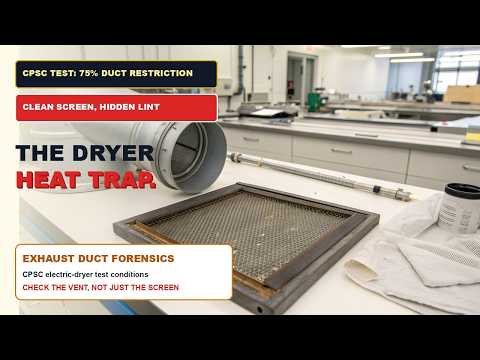
The Dryer Vent Lint Ignition Paradox: CPSC Airflow Failure Forensics & Thermodynamic Cutaway
3:52
The Microwave Defrosting Paradox: Why Ice Refuses to Melt Under 2.45 GHz
6:33
The Exploding Glass Cookware Mystery: The 150°C Thermal Shock Paradox
6:49
The Cavitation Shockwave: Why Micro-Jets Erode Solid Brass Impellers at 1,000 m/s
6:27
The 100W USB-C Micro-Arcing Teardown: How Hot-Plugging Destroys Gold Pins
6:10
The Active Noise Cancellation Inversion: Why Anti-Phase Waves Double Acoustic Pressure
6:33About the channel
Micro-Forensics (@MicroForensicsHQ) explains what is physically happening inside everyday objects: car engines, phone batteries, cookware, plumbing and home electronics. Each episode uses engineering cutaways and cites published standards from bodies such as NIST, SAE, ASTM, IEEE and ISO. Every episode ends with a practical, zero-cost rule viewers can apply at home.